
Signal plans Oosterweel connection
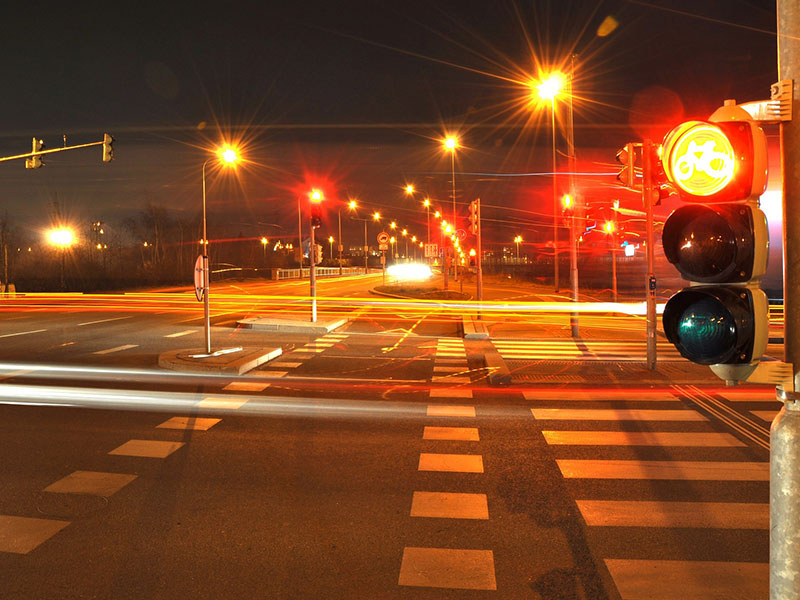
The works on the Oosterweel link in Antwerp bring changes to traffic flows and capacity, requiring adjustments to traffic signal control. For each phase, TML develops a signal plan (V-plan), detailing both infrastructure changes and signal programming, and carries out capacity assessments to share results with the contractor and other stakeholders.
The Oosterweel works have a significant impact on existing infrastructure and mobility patterns. Although the contractor delivers the project in phases, it is inevitable that, at certain moments, traffic flows, available space, and capacity at key junctions are altered. At the same time, construction sites must remain safely and clearly accessible for site traffic.
To accommodate these changes, traffic signal control at affected junctions needs to be adapted, both in terms of infrastructure (poles, signal heads, and detection) and programming. Given the urban context and the ambition to encourage a shift towards more sustainable transport modes, particular attention is paid to pedestrians, cyclists, buses, and trams. At the same time, queuing must not spill back onto the main network (the Ring Road).
For each phase involving changes to a junction, TML prepares a V-plan. This includes a layout plan showing (adjustments to) poles, signal heads, and detection, as well as a visual representation of the required signal programming. The main project areas are:
-
Groenendaallaan: the on- and off-ramp junctions in Merksem
-
Schijnpoortweg–Noordersingel: the junction of the Deurne on- and off-ramps and surrounding junctions on Schijnpoortweg and Bisschoppenhoflaan, as well as the junction near Spoor Oost, where the new Deurne on-ramp connection has been relocated
For these and other affected junctions, TML develops tailor-made traffic signal strategies. Based on the contractor’s work plans, we assess which junctions are impacted and what measures are feasible. Junctions are considered in an integrated way rather than in isolation, to avoid knock-on congestion and queue spillback. Proposals are coordinated with ROCO, Lantis, and other stakeholders such as AWV, the City of Antwerp, and De Lijn, before being translated into detailed designs and implemented on site.
Following commissioning, TML closely monitors the performance of the signal control and makes adjustments where necessary. We also monitor detection systems and collect traffic data to track how traffic patterns evolve during the works. Smaller optimisations are implemented directly, and we provide ongoing traffic engineering advice to keep the impact of the works as manageable as possible.